



.avif)


Why it's unique, what it produces, and how you run it — the three things to understand before anything else.
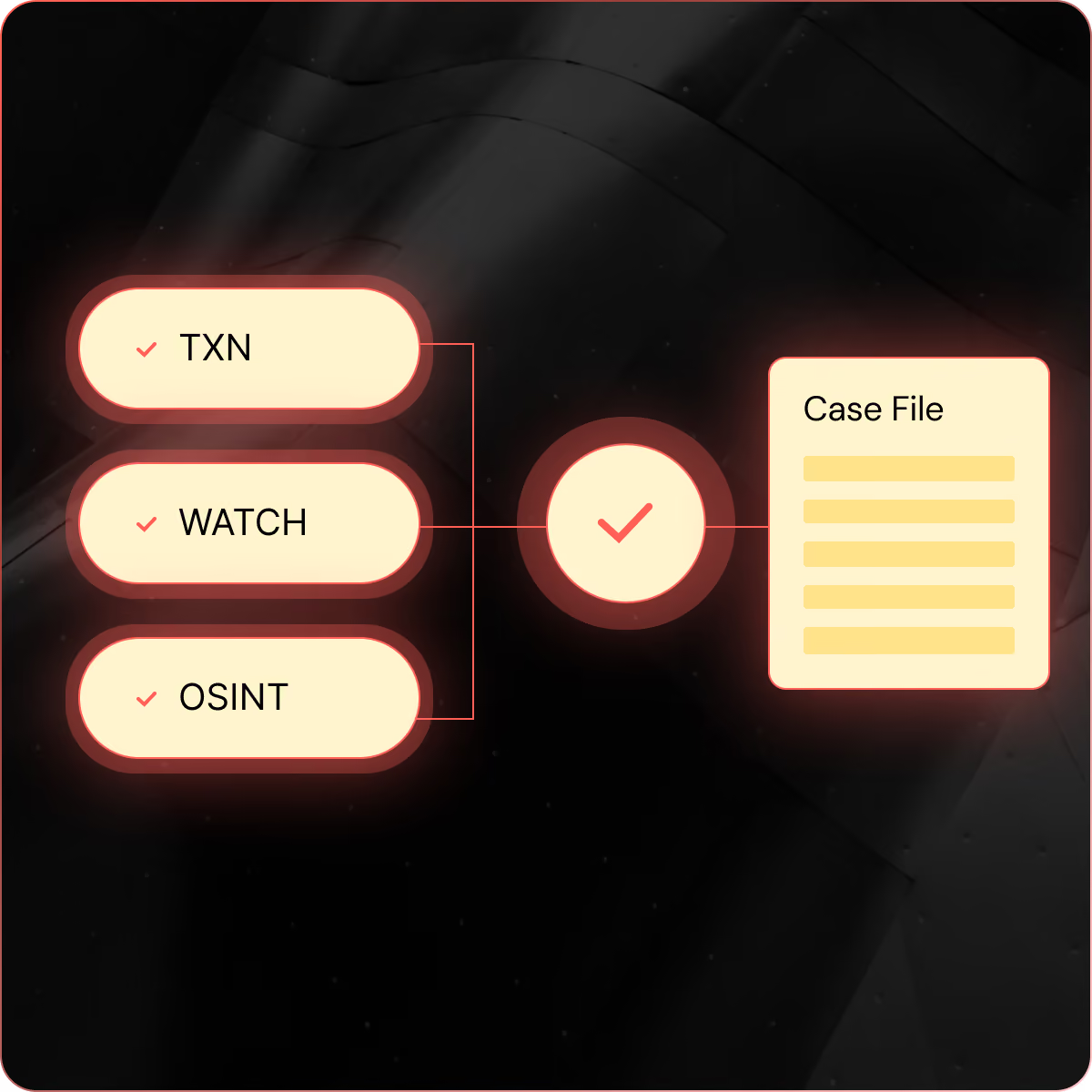
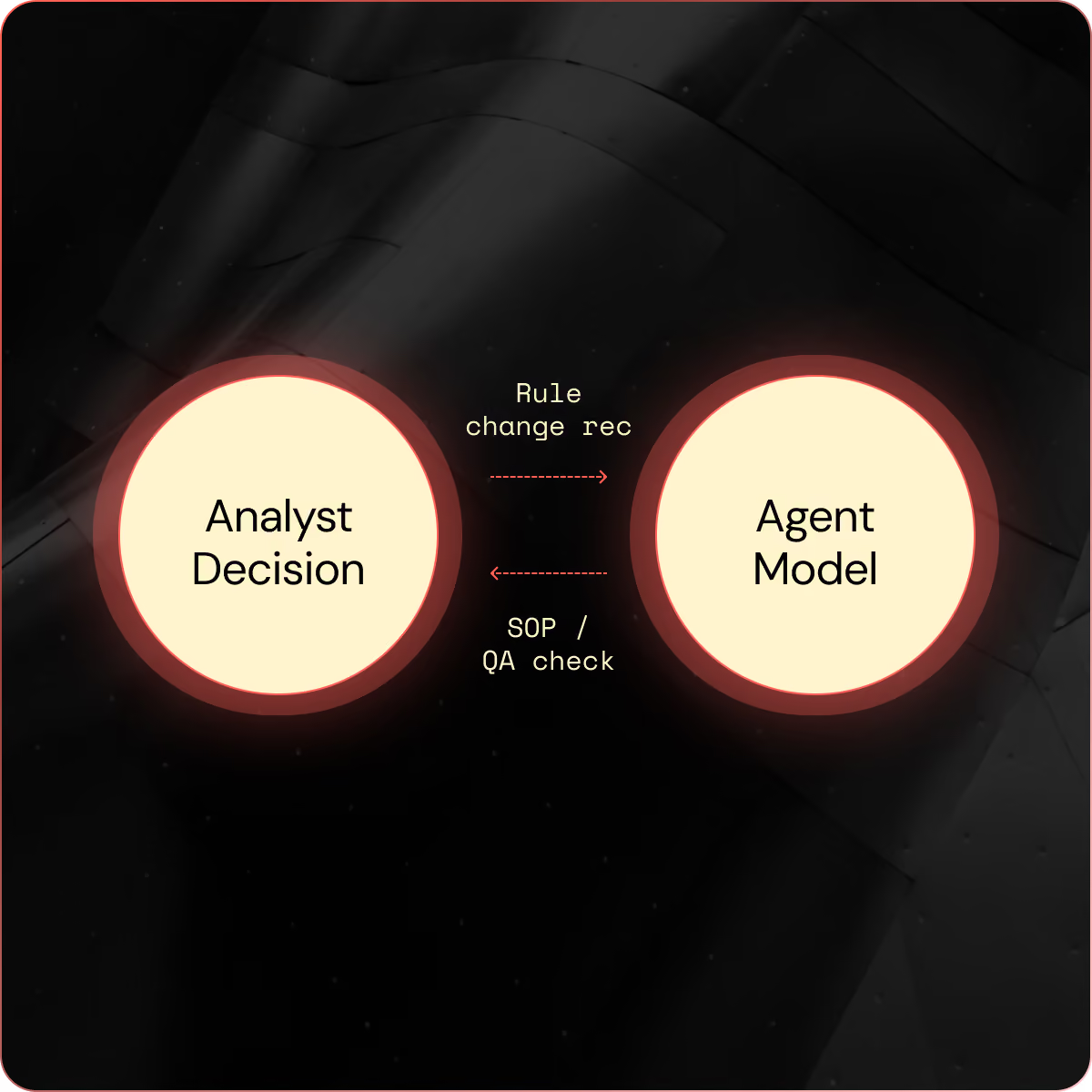

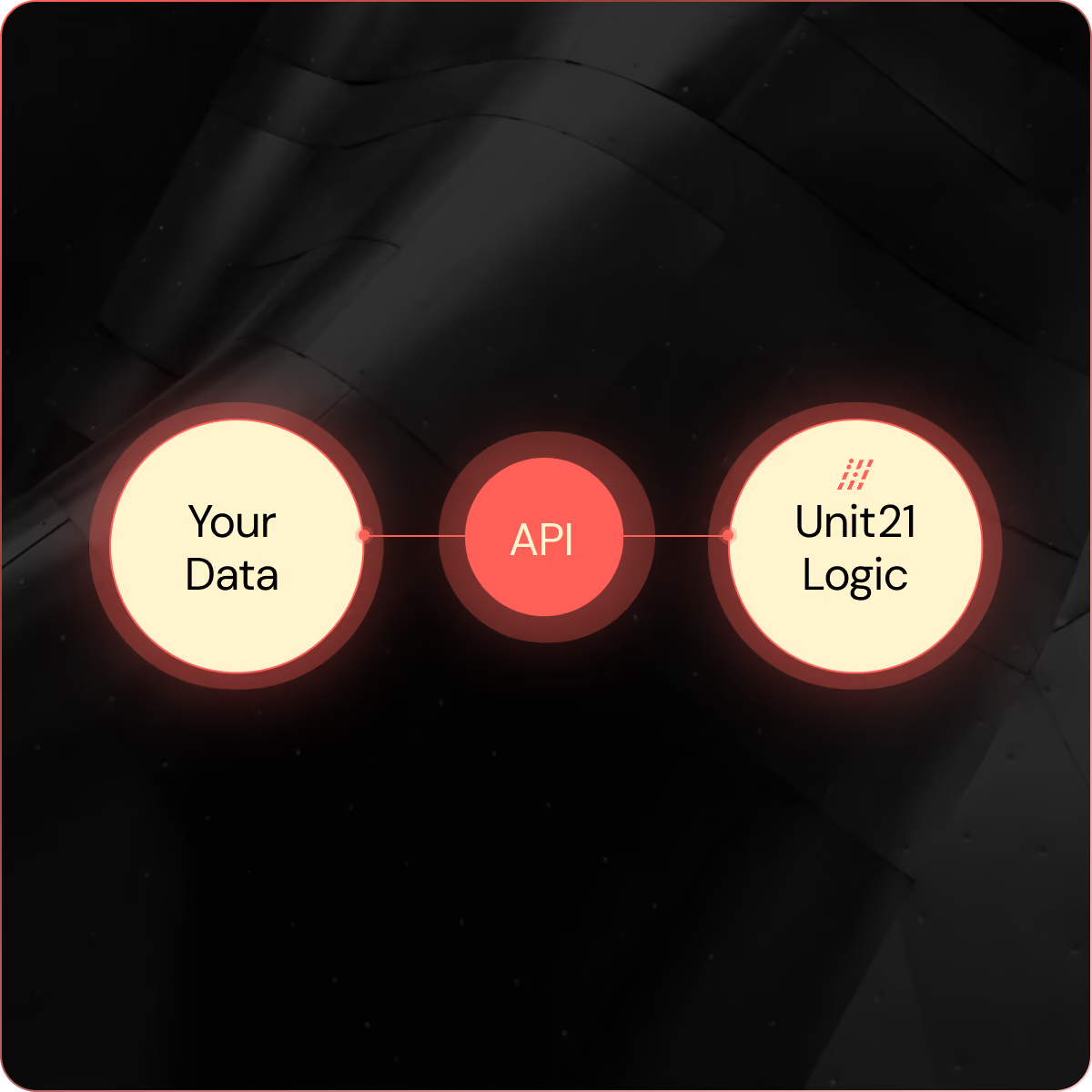
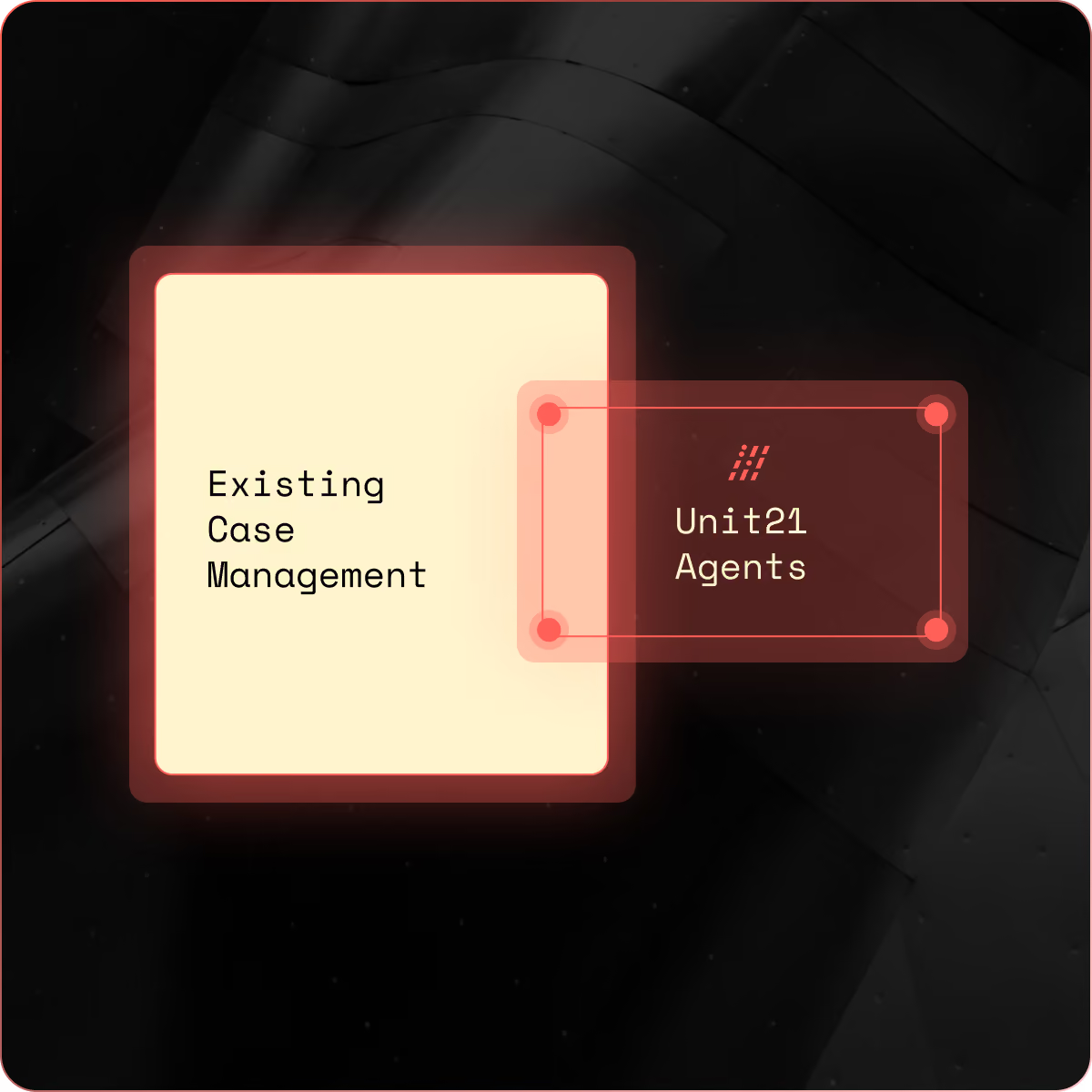




Detection agents tune what your rules catch. Investigation agents work what those rules surface.
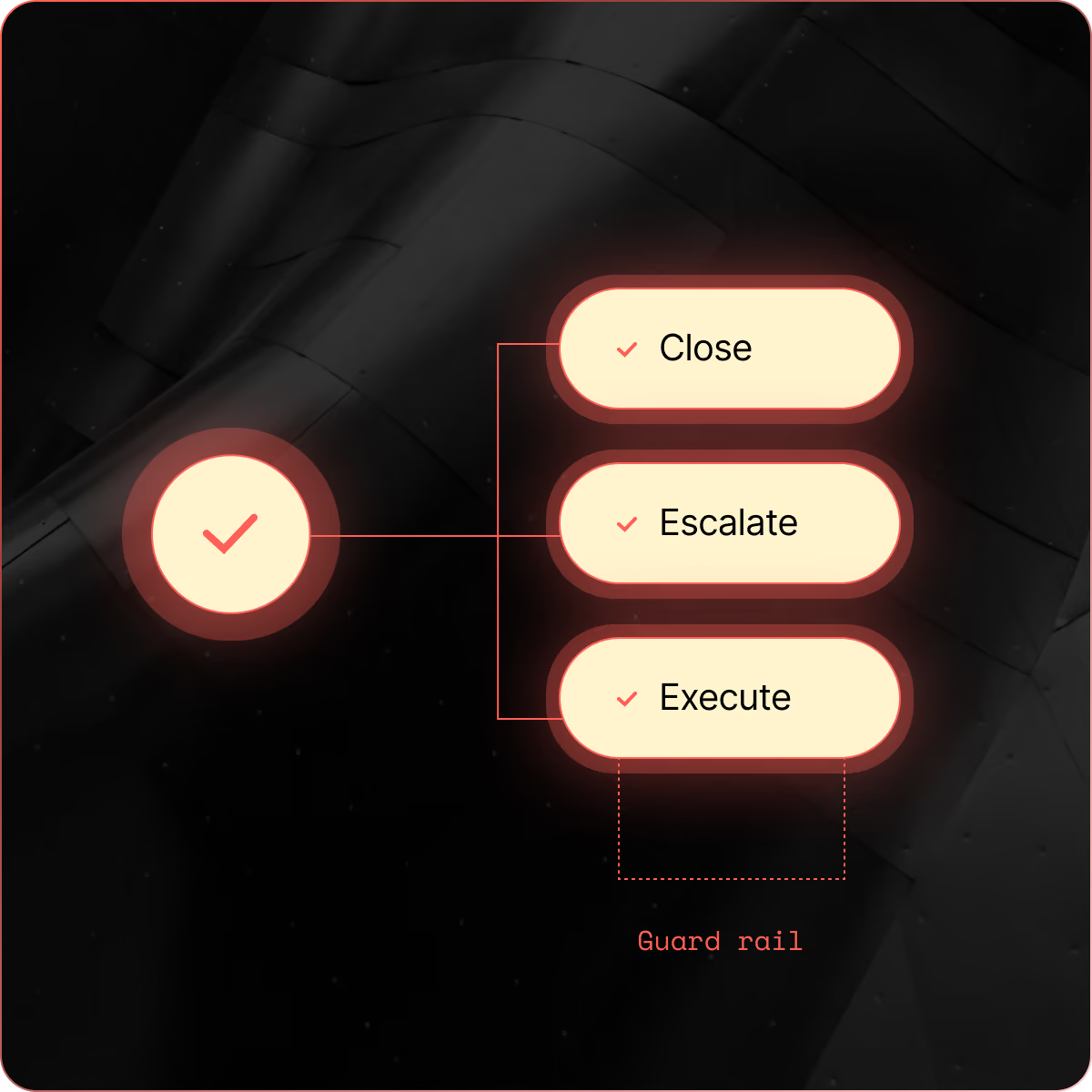
Mature platforms configure autonomy — not a binary on/off. Unit21's agents move up a four-level ladder, configurable independently per queue, use case, and risk tier. Read more.
Agent surfaces findings; a human decides every case, every time. No autonomous action.
Agent completes the investigation; a human reviews and makes the final call on every case.
Agent completes the investigation and recommends a disposition; a human approves, sampling rather than reviewing every case.
Clear, low-risk dispositions close automatically within your configured guardrails; humans handle exceptions and QA sampling.
*When an agent hits ambiguity or low confidence, it escalates — it doesn't guess. Unit21 customers typically start at level 2, validate accuracy in parallel with human review, then move to level 3–4 as confidence builds. 1.5M+ alert reviews and hundreds of regulatory exams passed running Unit21 to date.

What's holding fincrime practionarors from investing in AI?
What not just use Claude for fincrime ops?


A tactical framework for evaluating what agentic AI actually means for AML, fraud, sanctions, and more, plus a practical guide for buyers navigating a market full of vendor claims.
No — human-in-the-loop is a design principle, not a limitation. AI handles the repetitive, time-consuming work (evidence gathering, first-pass triage, narrative drafting); analysts make the final judgment call on anything that matters. As alert volume grows faster than teams can hire, this is how detection keeps pace without headcount scaling 1:1 with volume — not a replacement for the analyst's decision.
No. A chatbot answers questions when you ask it something. Unit21's AI Agents are workflow-executing software — they perform the actual investigation steps (gathering evidence, checking policy thresholds, drafting narratives) and produce an auditable, structured output, whether or not anyone is chatting with them. That distinction matters for governance: a chatbot has no defined scope, and an agent operating inside defined SOPs and guardrails does.
The AI Agent drafts the SAR narrative, extracts the supporting information, and auto-populates most SAR fields (and substantially all CTR fields) from the case evidence — but it does not auto-file. Human review and approval before filing is mandatory by design; no financial crime report leaves Unit21 without an analyst signing off. Think of it as removing the blank-page problem, not removing the compliance officer.
Yes. Every agent is configured to your SOPs, thresholds, narrative format, and approval gates — nothing runs against a generic, one-size-fits-all policy. Autonomy is also progressive: agents start at "on standby" (an analyst has to trigger them), move up through recommending a disposition for approval, and only reach auto-closing low-risk, clearly-defined case types once your team has built confidence in the agent's track record on your own data. You choose the ceiling for each queue, and you can move it up or down at any time.
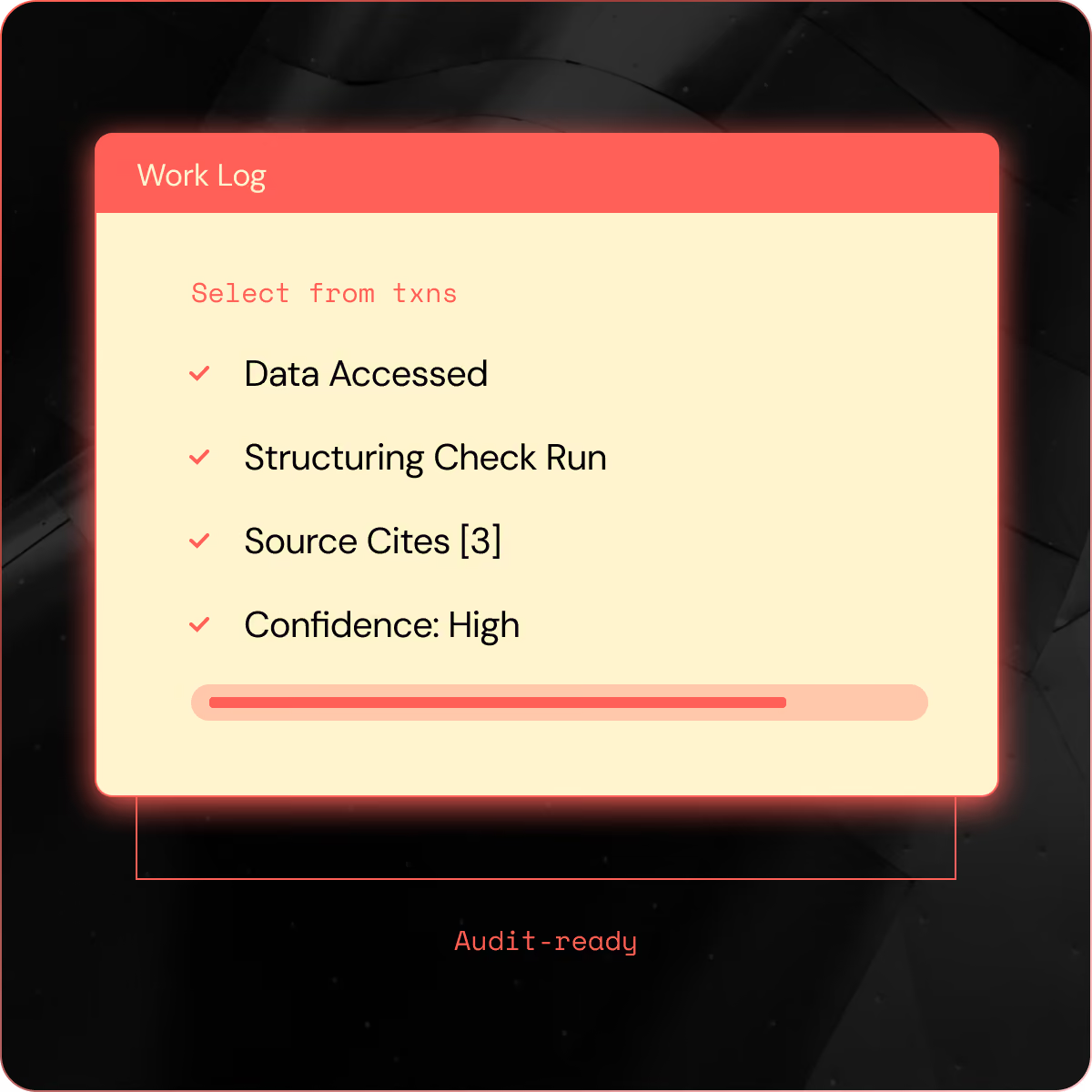
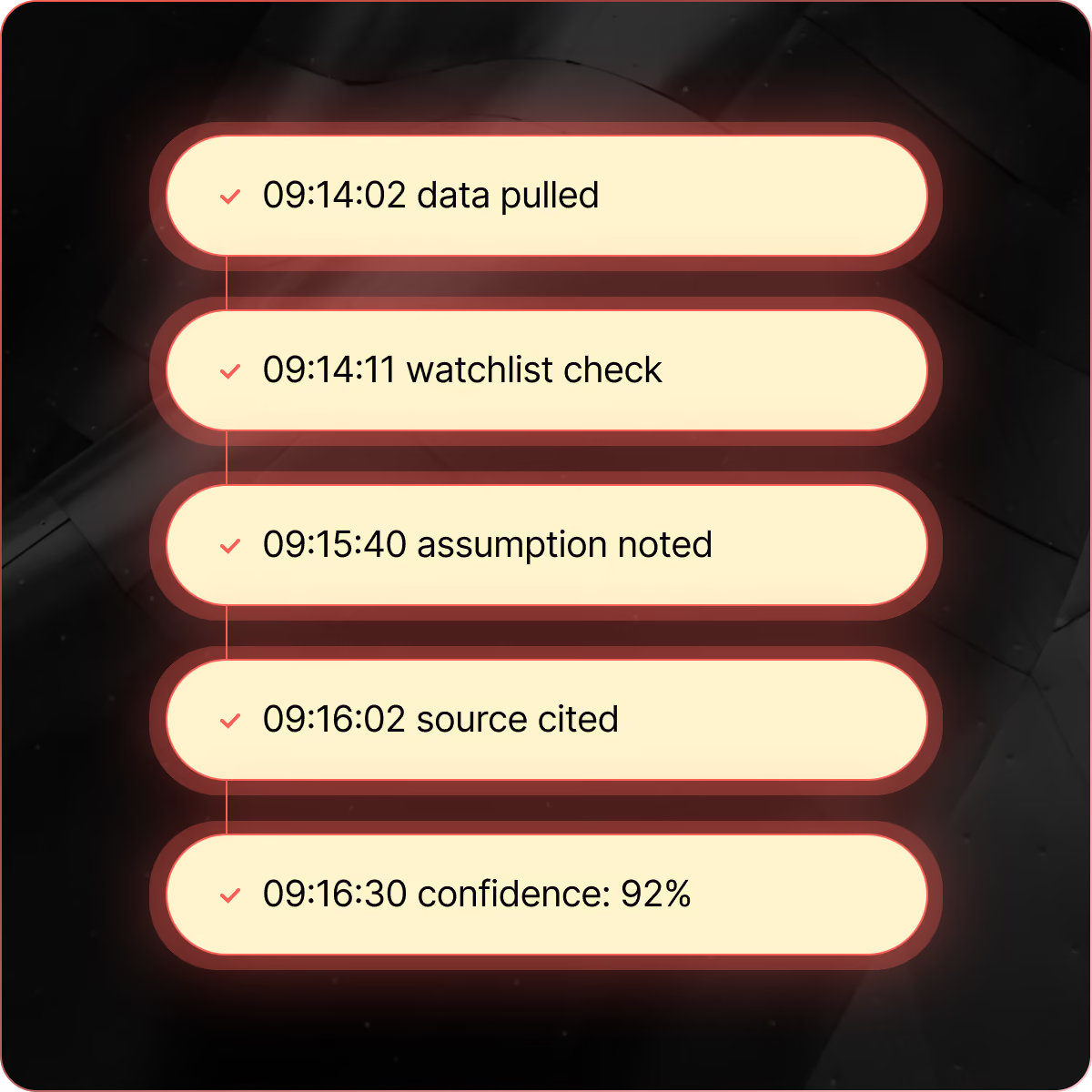
Every agent is evaluated against historical, expert-reviewed alerts before it ever touches a live queue (backtesting), and once live, teams can run random sampling on both agreement and disagreement cases to keep the agent defensible over time. Every run produces three things: the action taken (with rationale tied to evidence and policy), a regulator-ready narrative, and a transparent work log — what data was accessed, what checks were performed, what assumptions were made. If it's not defensible in front of an examiner, it doesn't ship.
No. Unit21 does not train models on customer data, and your data is never turned into someone else's training set. When an analyst overrides an AI recommendation, that override is captured and reviewed manually to inform product improvements — it does not feed an automated training loop on your casework.
You start with a single high-volume workflow — commonly L1 alert triage plus narrative drafting — and run it in parallel with your existing process so you can validate the agent's output against what your analysts would have done before it touches anything live. Once that workflow proves out, coverage expands to additional agent types and case volume. Nobody starts by handing over full autonomy on day one, and nobody has to.
Unit21's AI Agents run the financial crime investigation lifecycle end-to-end — not just summarize it. They triage alerts, pull transaction histories and linked-entity data, check watchlists, assemble evidence packages, draft regulator-ready narratives, and recommend a disposition for analyst review. Purpose-built agents cover specific workflows including transaction monitoring, sanctions screening, EDD, check fraud, ACH fraud, account takeover, and 314(a) requests, plus a Case Agent that investigates an entire case (not just one alert) and a SAR Agent that drafts narratives and pre-populates most SAR and CTR fields. Every agent's action, narrative, and evidence log is reviewed by a human before anything is filed or closed.
Most AI tools in this category are AI-assisted — they surface information and leave every judgment call to a human. Unit21's agents are AI-driven — they do the work itself (triaging, drafting, recommending), and the analyst reviews and approves rather than starting from a blank page. Unit21 does not ship traditional machine learning risk-scoring models (no black-box ML, no BYOML); the detection and investigation layer is a self-service rules engine plus LLM-powered agents, so every decision traces to explainable, auditable logic rather than a model score nobody can interrogate.
The analyst's judgment wins — every time. Agents recommend an action; a human approves, modifies, or rejects it before it becomes final. Overrides aren't a failure state: they're logged, and reviewing where analysts and the AI disagree is one of the standard ways teams tune an agent's configuration and build the audit trail regulators expect to see.
Accuracy is measured against a "golden set" — years of historical alerts already dispositioned by your best analysts — not against average performance, because in compliance the bar is what a strong analyst would conclude, not what's merely plausible. Reported outcomes from live deployments include up to 93% fewer false positives, up to 80% faster investigations, and up to 60% fewer false positives from AI-recommended rule changes; customers like Uphold and Nexo have seen 44% faster alert reviews and a 93% reduction in false positives respectively in production. Every number here is customer-reported and tied to a named deployment — not a lab benchmark.
No — real-time detection and AI investigation are two different layers. Unit21's core detection runs at sub-250ms latency across ACH, wires, RTP, cards, and crypto; AI Agents operate on the investigation side (post-alert), where they compress work that used to take an analyst 15–30 minutes down to a fraction of that, without touching the real-time decisioning path.
Unit21's Consortium pools anonymized, aggregated signal across the customer network — so a fraud pattern first seen at one bank or fintech strengthens detection for every other customer, without any customer ever seeing another's raw data. This is early-warning intelligence you can't build alone: the network has seen actors and patterns your institution hasn't encountered yet. It's a give-to-get model, not a data-sharing one.